
Central Heating Power Flush: The Ultimate 2026 Homeowner Guide
- Darrell Williamson
- 3 days ago
- 12 min read
What if your rising energy bills aren't just a result of market prices, but a symptom of a system fighting against itself? If you've noticed your radiators are cold at the bottom or your boiler has started making an unsettling "kettling" noise, you're likely dealing with internal corrosion. A professional central heating power flush is the most effective way to restore your system's health, clearing out the metallic sludge that forces your boiler to work twice as hard for half the warmth. It's a technical restoration process that targets the root cause of inefficiency rather than just masking the symptoms.
You deserve a home that stays warm throughout the winter without the constant fear of an expensive breakdown. We understand how frustrating it is to pay for heating that doesn't actually reach every room. This guide, brought to you by Hydronetic Power Flush, explains how mechanical cleaning clears stubborn boiler blockages and ensures your system achieves optimal energy efficiency for 2026. You'll learn how this service slashes gas consumption, protects your hardware, and provides the long-term peace of mind that homeowners across the United States rely on for home comfort.
Key Takeaways
Understand how a professional central heating power flush uses high-velocity, low-pressure water to clear the magnetite sludge that causes cold radiators.
Identify the critical signs of internal corrosion, including noisy boiler "kettling" and radiator sludge removal needs, before they cause permanent hardware damage.
Learn why specialized thermal imaging is necessary to locate hidden blockages and ensure every room in your home receives even heat distribution.
Discover the financial benefits of system restoration, such as lower monthly gas bills and avoiding the high cost of a premature boiler replacement.
Understand why general plumbing tools often fail to provide the thorough deep clean required for the hard water systems found in London and the South East.
Table of Contents
What is a Central Heating Power Flush and Why is it Necessary?
To understand why your radiators aren't performing as they should, it's helpful to look at the basics of what is central heating and how it functions as a closed loop. Over time, the water circulating through your pipes reacts with the steel and iron components of the system. This chemical reaction creates magnetite, a heavy, black, metallic sludge that settles in pipework and radiators. A central heating power flush is a high-velocity, low-pressure mechanical restoration designed to purge this debris from the entire circuit.
The process relies on a specialized flushing pump that creates a turbulent flow of water. This isn't a simple rinse; it's a diagnostic and restorative procedure. By reversing the flow and using targeted agitation, the pump dislodges stubborn deposits that have spent years hardening inside your radiators. With the 2026 energy standards placing a higher premium on efficiency, system cleanliness is now critical. Modern high-efficiency boilers have much narrower waterways than older models. Even a small amount of sludge can cause a significant boiler blockage, forcing the unit to consume more gas to achieve the same temperature.
The Warning Signs: Does Your System Need Help?
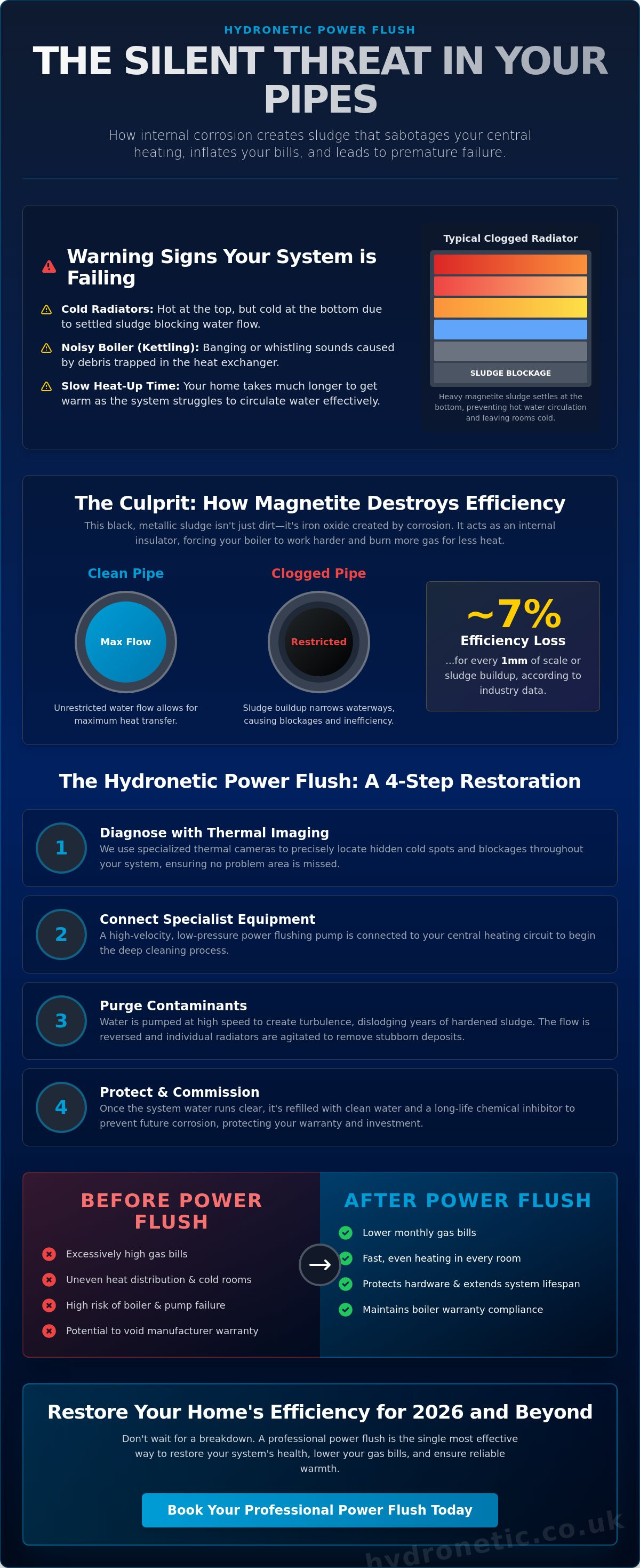
How do you know if your system is struggling? The most common symptom is "cold spots" at the bottom of your radiators. This happens because heavy sludge settles at the lowest point, preventing hot water from circulating through the entire panel. If your boiler makes a banging or whistling sound, often called "kettling," it's usually a sign that debris is trapped in the heat exchanger. You might also notice that your home takes much longer to reach a comfortable temperature. This occurs because the internal buildup acts as an unintended layer of insulation, preventing heat from transferring effectively from the water to your rooms.
The Consequences of Neglect
Ignoring these symptoms leads to more than just high bills. Internal corrosion can eventually eat through the metal, causing "pinhole" leaks that damage your flooring and decor. Sludge is also the leading cause of premature pump failure, as the motor must work significantly harder to move contaminated, viscous water. Residents in London, Essex, Kent, and Surrey often face these issues sooner due to regional hard water accelerating electrolytic corrosion. Perhaps most importantly, many manufacturers will void your warranty if they find that a boiler failure was caused by poor water quality. Maintaining a clean system is the most reliable way to safeguard your home and ensure long-term heating performance.
The Science of Sludge: How Magnetite Destroys Efficiency
The black, viscous debris often found in older systems isn't just "dirt" or "mud" as commonly described on community forums. It is a chemical byproduct known as magnetite (black iron oxide). This substance forms when the water inside your pipes reacts with the steel components of your radiators. Without a protective barrier, this internal oxidation creates heavy particles that circulate through your system. Homeowners in London and the South East face a higher risk due to hard water, which contains minerals that accelerate Corrosion in Central Heating Systems through electrolytic processes.
This buildup creates what engineers call the "insulation effect." Magnetite settles on the internal surfaces of your boiler and radiators, acting as a thermal barrier. Industry data suggests that even 1mm of scale or sludge can reduce your boiler's heating efficiency by approximately 7%. This means you're burning more gas to achieve less warmth. A professional central heating power flush is designed to strip these layers away, restoring the metal-to-water contact necessary for efficient heat transfer. Without this restoration, your boiler remains in a state of constant overwork, leading to higher bills and unnecessary component wear.
How Sludge Accumulates in Your Radiators
Sludge follows the laws of physics. It settles in areas where the water flow is slowest, which is why the bottom of a radiator is typically the first place to fail. As the heavy magnetite drops to the base, it creates a solid mass that prevents hot water from circulating through the lower half of the panel. Many homeowners attempt to "bleed" their radiators to fix this, but bleeding only releases trapped air from the top. It does nothing to remove the heavy, metallic paste sitting at the bottom. Over time, the corrosion inhibitors that were originally added to your system deplete, leaving the bare metal vulnerable to further oxidation. A targeted central heating power flush addresses these internal restrictions before they lead to a total system failure.
Boiler Blockages and Hot Water Loss
The most vulnerable component in a modern system is the boiler's heat exchanger. These parts feature incredibly narrow waterways designed for maximum heat absorption. When magnetite enters these channels, it creates a significant boiler blockage. This often affects the diverter valve or the plate heat exchanger, which are responsible for switching between your heating and hot water. If you've noticed you have warm radiators but lukewarm showers, sludge is likely the culprit. This debris causes the boiler to "cycle," which is when the unit rapidly turns on and off because it cannot move heat away from the burner fast enough. This constant stopping and starting is a major contributor to premature hardware failure.
The Professional Power Flush Process: Step-by-Step
A professional central heating power flush is a methodical operation that follows a strict technical sequence to ensure every part of your system is restored. It begins with a comprehensive diagnostic assessment of your boiler and pipework. We don't just guess where the issues are; we use data to drive the cleaning process. Once the initial health check is complete, the specialist connects a high-flow flushing station to your system. This connection usually occurs at the central circulator pump or a specific radiator, allowing the machine to take control of the water flow without exceeding safe pressure limits.
The core of the service involves isolating each radiator one by one. By focusing the full force of the flushing pump on a single panel, we can dislodge the stubborn magnetite sludge that a standard system rinse would leave behind. After the mechanical agitation is finished, we use chemical neutralisers to ensure the system's pH balance is restored. We then apply high-grade corrosion inhibitors to provide long-term protection against future oxidation. The process concludes with a TDS (Total Dissolved Solids) test. This verifies that the water inside your heating circuit is as clean as the fresh water entering your home, confirming that the restoration is complete.
Thermal Imaging: Seeing the Blockages
We believe in transparency, which is why we use infrared technology to prove the effectiveness of our work. Thermal cameras reveal hidden cold spots by visualizing the temperature variance across the radiator surface, identifying exactly where sludge has settled. This technology allows us to see "before and after" results in real time. It's particularly useful for identifying blocked Thermostatic Radiator Valves (TRVs) that might be restricting flow even after the pipes are clear. By the end of the session, your thermal report will show an even, consistent heat signature across every radiator in the house.
What to Expect on the Day
A thorough central heating power flush is a significant undertaking that requires precision. For a standard three-bedroom home, the process typically takes between 6 and 10 hours to complete. We respect your environment and take extensive measures to ensure your property remains spotless. This includes using protective floor coverings and waterproof barriers around the flushing station to safeguard your carpets and furniture. Once the work is finished, we provide a final "health check" and a detailed performance report. This document outlines the improvements in flow rate and temperature, giving you the peace of mind that your system is ready for winter.
Specialist vs. General Plumber: Choosing the Right Expert
Many homeowners assume any qualified plumber can perform a central heating power flush. While general plumbers are essential for fixing leaks or emergency repairs, they often lack the specialized, high-investment machinery required for deep mechanical cleaning. A standard plumbing toolkit isn't designed for system restoration. Specialists focus exclusively on the internal health of your heating circuit, using industrial-grade equipment that a generalist might only use once or twice a year. This distinction is vital. An ineffective flush leaves magnetite behind, which quickly settles and causes the same blockages you tried to fix.
Choosing a specialist also provides a layer of security through tailored insurance. High-pressure restoration work carries specific risks that standard public liability policies might not fully cover. At Hydronetic Power Flush, our focus is entirely on restoration rather than new installations. This means our expertise is concentrated on making your existing system work like new. We don't just clear a blockage; we restore the thermal performance of your entire home through a disciplined, technical approach.
Equipment Matters: Not All Pumps are Equal
The secret to a successful clean is high flow, not high pressure. High pressure can actually damage older joints and seals. Instead, we use high-velocity pumps that move water rapidly to keep debris in suspension until it can be removed from the circuit. During the process, we employ powerful magnetic filters to capture dislodged metallic particles before they can re-enter your boiler. This is far more effective than "chemical dumps" or DIY treatments. Those methods usually only soften the top layer of sludge without actually removing the bulk of the debris from the property.
Regional Expertise in the South East
Regional knowledge is a significant factor in system longevity. In London, we frequently work with the complex pipework of Victorian terraced houses, where older gravity-fed systems present unique air-lock challenges. Conversely, large residential estates in Kent and Surrey often feature expansive systems with over 15 radiators. These require high-capacity pumps to maintain flow across multiple floors. Homeowners in Essex deal with some of the highest water hardness levels in the country, leading to rapid scale buildup in heat exchangers. We understand these local variables and tailor our approach to the specific environmental pressures of your area.
If you want to ensure your home remains efficient and protected, book a professional central heating power flush with a team that understands the mechanics of South East heating systems.
The ROI of a Power Flush: Energy Savings and Longevity
A central heating power flush isn't just an expense; it's a strategic investment in your home's infrastructure. In 2026, maximizing efficiency is the most direct way to lower your monthly gas consumption and protect yourself against fluctuating energy prices. By removing the insulating layer of magnetite discussed earlier, your boiler operates at its peak design efficiency. This restoration can delay a full boiler replacement, which typically costs £3,000 or more, for many years. Beyond the financial savings, you'll experience a level of domestic comfort that a sludge-filled system simply cannot provide. Heat distribution becomes even across all rooms. This improved efficiency also reduces your home's carbon footprint, as your system requires less fuel to maintain a steady temperature.
While focusing on heating restoration is vital, comprehensive home comfort often includes efficient cooling; for instance, Commodus offers advanced air conditioning solutions that complement a well-maintained heating circuit.
The long-term value of this service is also reflected in the reliability of your system. When water flows freely, components like the circulator pump and diverter valve experience significantly less mechanical stress. This reduces the frequency of emergency call-outs and ensures your heating remains dependable during the coldest months. It's a methodical approach to home maintenance that prioritizes prevention over reactive, expensive repairs.
Protecting Your Boiler Warranty
Manufacturers are increasingly strict about system cleanliness as a condition of their guarantees. Many leading manufacturers may reject warranty claims if they determine that a component failure was caused by internal debris or sludge. We provide the necessary documentation and certification for your home records. This paperwork acts as proof of professional maintenance, which is invaluable if you ever need to make a claim or decide to sell your property.
Next Steps: Securing Your Heating System
To maintain these results, we recommend a central heating power flush every five to ten years, depending on the age and type of your system. Installing a high-quality magnetic system filter is also a wise preventative step. These filters continuously capture metallic particles before they can settle, prolonging the interval between deep cleans. If you've noticed the warning signs mentioned in this guide, the best course of action is to address the issue before it leads to a total winter breakdown. You can get a professional power flush quote from Hydronetic to restore your system's health and secure your home's comfort today.
Securing Your Home's Thermal Performance
Maintaining a healthy heating system is no longer just about comfort; it's about safeguarding your home's infrastructure against the technical demands of 2026 energy standards. We've explored how a central heating power flush removes the destructive magnetite sludge that compromises your boiler's heat exchanger and leaves radiators with persistent cold spots. By choosing a methodical mechanical restoration over a temporary fix, you're opting to extend the life of your hardware and reduce your monthly gas consumption. This proactive approach ensures your system remains compliant with manufacturer warranty requirements while delivering the even heat distribution your family deserves.
As specialists serving London, Essex, Kent, and Surrey, our team uses advanced thermal imaging to diagnose internal blockages with surgical precision. Our focus on expert boiler blockage clearance ensures that your system operates as the manufacturer intended, protecting your wallet from premature replacement costs. Don't wait for a winter breakdown to address these hidden internal issues. Restore your heating efficiency with a Hydronetic Power Flush and enjoy the quiet confidence of a warm, reliable home. You'll feel the difference in every room the moment your circulation is fully restored.
Frequently Asked Questions
Is a central heating power flush worth the money?
A central heating power flush is a cost-effective investment because it prevents the premature failure of expensive components. By removing magnetite sludge, you restore the system's thermal efficiency, which leads to lower monthly gas bills. While there is an upfront cost for the specialist service, it is significantly lower than the price of replacing a boiler or multiple radiators damaged by internal corrosion.
How long does a power flush take to complete?
A thorough professional service typically takes between 6 and 10 hours to complete for a standard residential property. The duration depends on the number of radiators in your home and the level of contamination within the pipework. Systems with heavy sludge buildup require more time for the chemical agitation and high-velocity flushing to be effective, ensuring that every radiator is individually cleared of debris.
Will a power flush cause my radiators to leak?
The process itself does not cause leaks, as it operates at a low pressure that is safe for domestic systems. However, a power flush may reveal existing "pinhole" leaks that were previously blocked by a plug of sludge or corrosion. While this might seem concerning, it is better to identify and resolve these weakened areas in a controlled environment rather than during a mid-winter heating failure.
Can I stay in the house while the power flush is being done?
You can remain in your home throughout the entire procedure. The equipment is usually set up in a single location, such as near the boiler or a specific radiator, and does not require lifting floorboards or major structural work. While the heating will be turned off during the flush, the specialist works to ensure the environment remains clean by using protective coverings and waterproof barriers around the workstation.
What is the difference between a power flush and a chemical flush?
A chemical flush is a basic gravity-fed rinse where cleaning agents are added to the system and then drained, which often fails to remove heavy, settled sludge. In contrast, a central heating power flush uses a high-velocity pump to create turbulent flow, mechanically dislodging stubborn magnetite. This mechanical restoration is far more thorough and is the only method capable of clearing significant boiler blockages and restoring full circulation.
Will a power flush fix a noisy boiler?
If your boiler's noise is caused by "kettling" or banging due to sludge in the heat exchanger, a power flush will likely resolve the issue. By removing the debris that causes localized overheating and steam bubbles, the system can operate at a much quieter volume. However, if the noise is due to a mechanical fault in a fan or bearing, separate repairs may still be required.
Do I need a power flush before installing a new boiler?
Most manufacturers and industry standards, such as BS 7593:2019, require the existing pipework to be thoroughly cleaned before a new unit is commissioned. Installing a modern, high-efficiency boiler onto a dirty system will quickly lead to blockages in its narrow waterways. Performing a flush ensures that your new investment is protected and that the manufacturer's warranty remains valid from the day of installation.
How much does a central heating power flush cost in London?
The cost of a professional flush in London and the South East varies based on the size of your heating system and the number of radiators. Factors such as system age and the level of magnetite contamination also influence the final price. Because London properties often feature older, more complex pipework, the service requires specialized equipment and more time to ensure a complete restoration of the heating circuit.

Comments